

How To Get Eggs Room Template
Here nosotros get again, bakers! A new postal service in my baking basics series.
While traveling and meeting yous on my book tour these past few months, I've learned ii things. (ane) You cannot have a jar of peanut butter through security. They will confiscate information technology. And (2) many of you– not but in person but also in comments, emails, social media, etc– accept told me that you Dear learning about the science, groundwork, whys, and why nots in baking. Why some ingredients piece of work, why others practice non. The particular methods for detail recipes and why they are used. I'm fascinated by it all also! And so that's why I'm focusing on a few new topics in this baking nuts series, including today'south crucial rule.
I'm the most impatient person on this planet, just something I always care for with patience is blistering. You lot can't rush blistering. You lot tin't speed up cookie dough spooky, the chocolate setting, or the cheesecake evenly firming. Y'all can't rush French macarons or skip a dough proofing step. And you absolutely can't ignore the need for room temperature ingredients past using directly-from-the-fridge instead.
Certain recipes call for ingredients like eggs, yogurt, cream cheese, butter, and/or milk to be at room temperature but many people ignore this footstep. No! Don't! Room temperature isn't listed next to ingredients for fun. There's science and legitimate reason behind the importance of temperature. Which brings me to my elevation baking rule: if a recipe calls for room temperature ingredients, use room temperature ingredients. There is no way around this and if y'all employ, say, common cold butter or cold eggs when they should be room temperature– your recipe won't live upwards to its potential. And it nigh certainly won't taste the way it should.
Why Is Room Temperature Important?
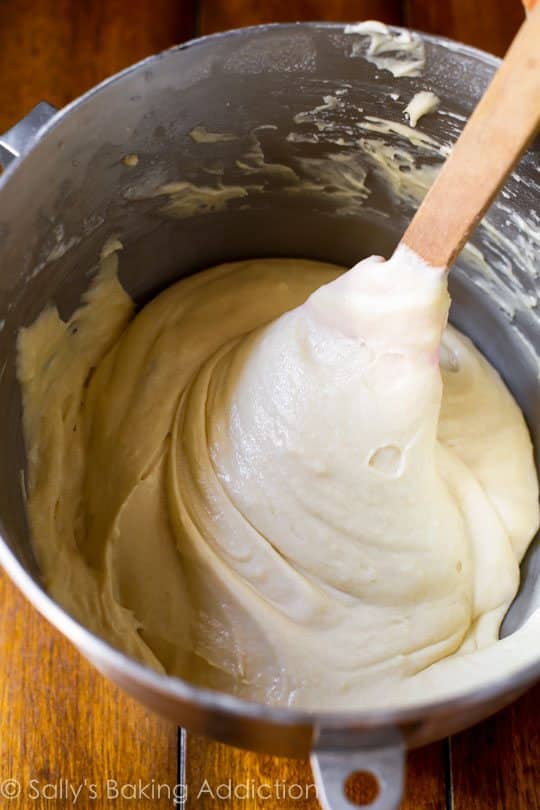
When at room temperature, eggs, butter, and other dairy ingredients form an emulsion which traps air. While blistering in the oven, that trapped air expands and produces a fluffy broiled expert. For example: a light-textured cake or a tender cupcake. Not merely this, room temperature ingredients bond together very easily since they're warmer, creating a seamless and evenly textured batter. A smooth batter = a uniformly textured broiled good. Cold ingredients do not incorporate together as easily. Or fifty-fifty at all! This results in clumpy frosting, chunky cheesecake, dense cookies, flat breads and muffins, etc.
In other words, complete recipe failures.
Room Temperature Butter
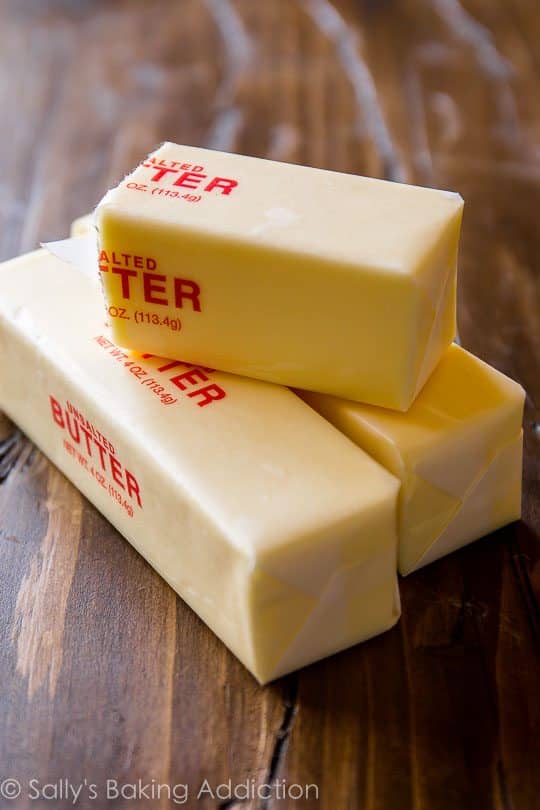
A lot of recipes start with room temperature butter creamed with saccharide. Creaming just means that the two are beaten together until light, white, and creamy. When you think about it, sugar is zero simply a billion petty jagged-edged (and delicious!) crystals. When browbeaten with butter, their edges dig out lilliputian air pockets in the butter. If your butter is as well cold because you just took information technology out of the fridge or only gave it 10 minutes to soften, the sugar crystals can't claw their way through the hard butter. No trapped air, no light and airy baked skilful.
If the butter is at its magic room temperature, the sugar effectively aerates the butter during that creaming procedure. The blistering powder and/or soda helps expand those fiddling air pockets the creaming process created and your finished broiled good is light! Tender! Fluffy! Just as it should be because y'all followed the rules with the MAGIC that is room temperature butter.
And the same goes for room temperature butter in buttercream frostings. How tin can you outset a beautifully flossy and fluffy frosting with common cold butter? And the same for cream cheese frosting– with cold cream cheese? You lot tin't! The resulting frosting will exist clumpy. It's not pretty and chunks of butter or foam cheese in your frosting certainly isn't appetizing.
When butter is at room temperature, yous should be able to printing your finger into it and brand an indent easily, without your finger sliding anywhere. House, but not cold. Lightly softened without existence greasy or melty in the slightest. Here's a photo:
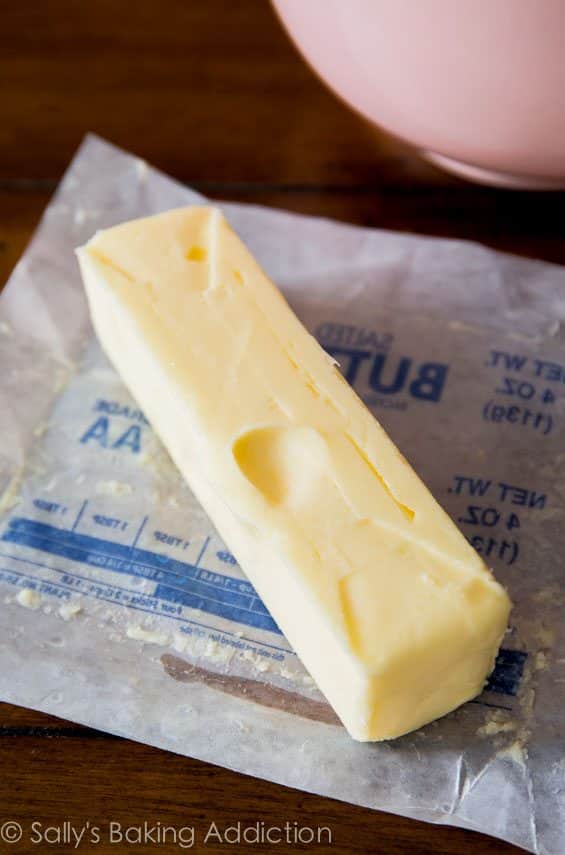
How to bring butter to room temperature: no rocket science here! Simply take the butter out of the refrigerator 1 hour before beginning your recipe. No ifs, ands, or buts. Sometimes I put the butter on a plate near my oven if I'chiliad using the oven for something else– fifty-fifty simply a piffling heat helps speed information technology upward. If you try to utilise the microwave to soften that butter, be extremely careful equally the slightest scrap of melted butter can ruin your entire creaming process. Endeavour slicing the stick of butter into 8 equal pieces (8 Tablespoons), placing on a plate, and microwaving for ii seconds. Stop. two seconds more. End. But I urge you to but practise it the old schoolhouse way. The i where patience is needed. The microwave is one risky method.
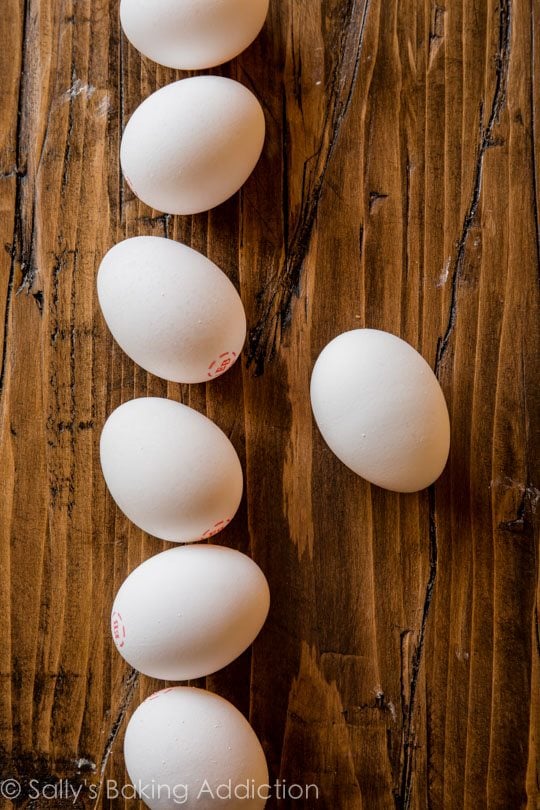
Room Temperature Eggs
It's besides super imperative for eggs to be at room temperature when the recipe calls for it. A lot of this is because of air bubbles again. When yous shell or whisk an egg, the egg'due south protein traps the air bubbling. And while baking, the bubbling aggrandize in the heat of the oven. And, over again, air bubbles expanding = lighter textured baked expert. Air trapping is at its peak when the eggs are at room temperature. Ever notice that information technology's much quicker to whip, beat, or whisk eggs when they're room temperature? They come up together so much easier and actually whip to a higher volume! That's because they're more loose, for lack of better words.
The whole air trapping business isn't the simply reason why we use room temperature eggs in broiled goods. Adding cold eggs to a room temperature fat (similar creamed butter and saccharide) could daze, harden, and curdle that fat. This would ruin the creamed mixture, the unabridged base of operations of your recipe. If you lot bake the recipe with this ruined creamed mixture, you'll take a bunch of little holes in your cupcakes from the hardened butter pieces. Don't sabotage your recipe!
How to bring eggs to room temperature: It'due south piece of cake! Just identify the eggs in a bowl of warm h2o for 10-15 minutes. I ordinarily do this while I'm getting other ingredients fix. Practise not apply pipe hot water– yous don't want to cook those eggs.
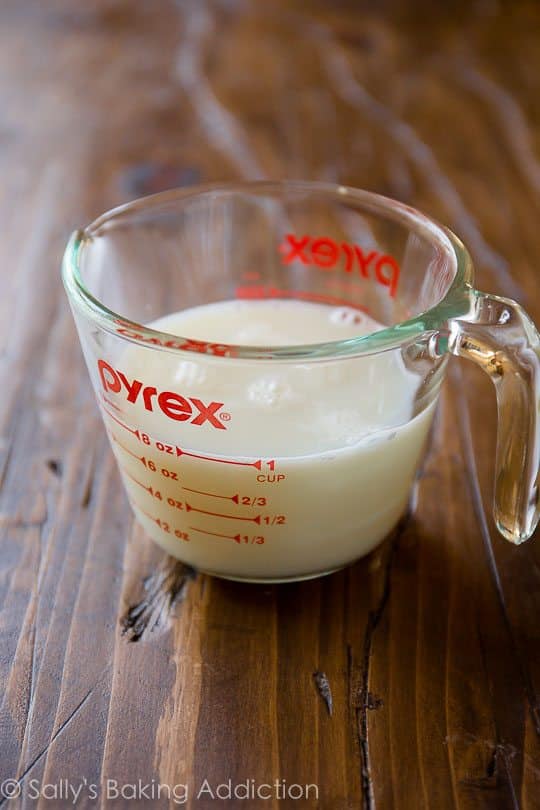
Room Temperature Yogurt, Cream Cheese, Milk, Etc
A lot of cake, cupcake, or breadstuff recipes starting with room temperature butter call for other dairy ingredients similar milk, cream, yogurt, etc. The emulsion begins with the butter, saccharide, and eggs just it doesn't stop at that place. It continues with the residual of the ingredients. To keep your batter smooth and the emulsification seamless, make sure the residue of the recipe ingredients are room temperature likewise. Like in my recent yogurt bars = all room temperature. Or in cakes, cupcakes, breads, everything!
Adept rule of thumb: if the recipe calls for room temperature or melted butter, the residual of the ingredients should be room temperature as well unless otherwise specified.
How to bring these ingredients to room temperature: no shortcuts here. Simply take these ingredients out of the refrigerator when you have out the butter to soften, nigh 1 60 minutes before beginning the recipe.
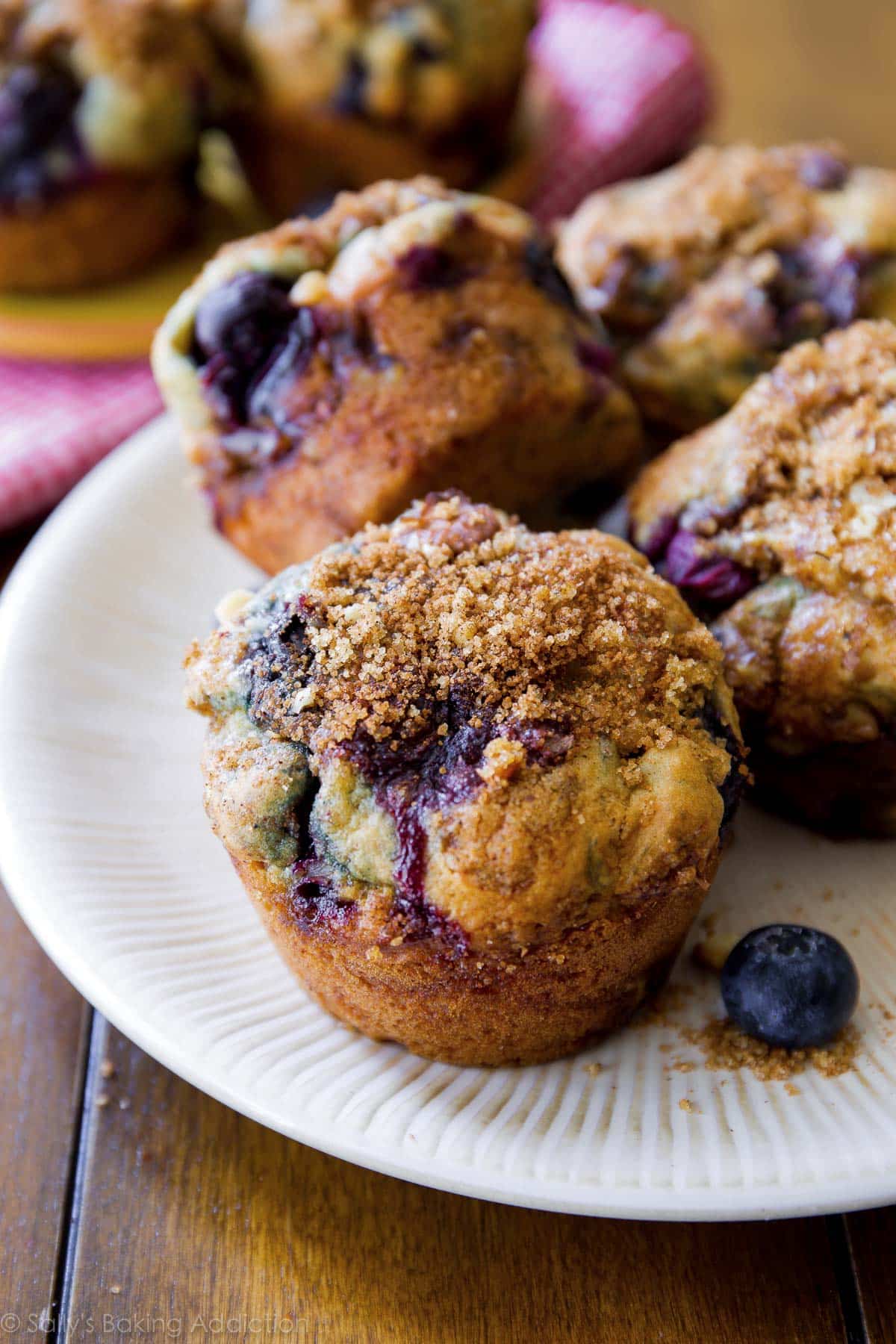
Here are the blueberry streusel muffins pictured today.
I've said it a billion times and I'll say it over again: when information technology comes to baking, it pays off to exist a perfectionist. Pay attention to temperature. Temperature is a reason your recipe will or won't turn out. Ever follow the recipe. Exercise you understand the importance of room temperature ingredients at present? Promise so!
Further reading:
- My Top 10 Blistering Tips
- Baking Powder vs. Baking Soda
- How to Properly Mensurate Blistering Ingredients
- Dutch-Process vs. Natural Cocoa Powder
Subscribe
Baking Made Easy
Are you new to this website? This electronic mail serial is a great place to showtime. I'll walk you through a few of my most popular recipes and show y'all exactly why they work.

How To Get Eggs Room Template,
Source: https://sallysbakingaddiction.com/baking-basics-room-temperature-ingredients/
Posted by: leclairformar.blogspot.com
0 Response to "How To Get Eggs Room Template"
Post a Comment